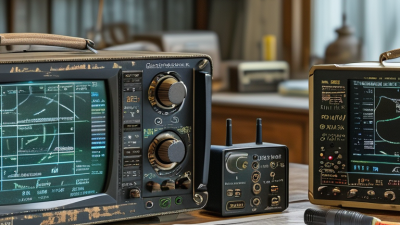
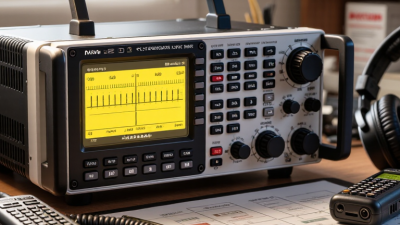
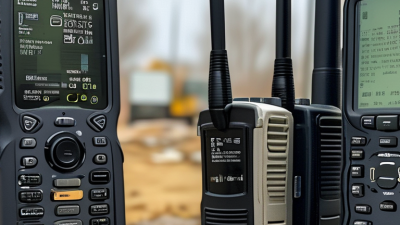
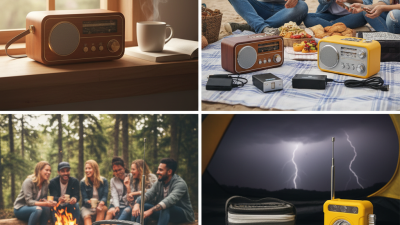
Choosing among the 10 best Ham Radios to buy in 2026 means matching a radio to the way you actually plan to operate. A compact handheld may suit local repeaters and trail use. A base station may offer more comfort for longer sessions at home. Mobile operators need to weigh installation space, power needs, and antenna options. The most impressive specification sheet is not always the most useful one.
Longtime amateur-radio educator Gordon West’s practical teaching can be paraphrased this way: “Choose equipment around your operating needs, not feature counts.” That is a useful lens, not a substitute for checking current manufacturer specifications. This guide will compare radio types, core features, ease of use, and value, while noting where an advertised advantage may matter less in everyday use. Buyers should also confirm that a radio’s bands and capabilities fit their experience and applicable local requirements.
Small details count. Can you read the display in bright sunlight? Do the controls make sense with cold fingers? Does the menu slow you down? These questions rarely headline a product page. A ranked list can make the choice look cleaner than it is; budgets, antennas, and operating habits change the answer. I may give usability more weight than raw power, and that deserves scrutiny. Use the picks as a starting point, then verify the details before buying.
Ham Radio Fundamentals: FCC Part 97, License Classes, and Amateur Bands
Before choosing a handheld or base station, understand the rules that shape amateur radio use in the United States. FCC Part 97 sets requirements for identification, permitted transmissions, and operating conduct. Operators need an appropriate amateur license before transmitting. A radio’s power or features do not grant additional privileges. Check current FCC guidance, since details can change.
The Technician, General, and Amateur Extra licenses offer different operating privileges. Technician operators commonly use local VHF and UHF bands, including 2 meters and 70 centimeters. General and Amateur Extra licensees gain broader access to HF bands, where signals can travel much farther. Band plans help operators choose suitable frequencies and modes, but they are not substitutes for FCC rules. A chart taped beside a radio can make those distinctions easier to remember. One easy mistake is assuming every frequency on a dial is available to every license class.
Tips: Before buying, compare the radio’s supported bands with your license privileges and intended use. Keep a current band chart nearby. Start by listening, then confirm the frequency and operating rules before transmitting. A checklist helps, though it will not replace careful judgment.

Approximate width of selected U.S. amateur allocations, in kilohertz.
The chart compares allocation widths, not the frequencies a particular operator may use. FCC Part 97 rules and license class determine operating privileges; Technician and General exams each have 35 questions, while the Amateur Extra exam has 50. The 60-meter band is omitted because U.S. access is channelized rather than a continuous allocation.
A 2026 comparison should treat 5–100 W as a practical test window, not a quality ranking. FCC rule 47 CFR §97.313 sets a general 1,500 W PEP ceiling for amateur stations, with band-specific exceptions; that ceiling is regulatory, not a buying recommendation. At 5 W, a radio may suit portable battery use, but contacts also depend on the antenna, propagation, and operator skill. At 100 W, compare heat management, power draw, and clean output—not just the number on the box. Small details matter.
Receiver coverage deserves equal weight. The ARRL 2024–2025 band plan maps HF allocations from 1.8 to 29.7 MHz, so verify that a receiver covers the bands you intend to monitor. Distinguish receive coverage from permitted transmit coverage; wide receive tuning does not authorize transmission. Check support for SSB, CW, FM, and common digital modes, along with filtering that keeps adjacent signals intelligible on a crowded evening band. Listen for weak stations. A spec sheet cannot show that well. One weakness in this rubric: no single frequency span or wattage predicts real-world performance; antenna matching and local noise can overturn a ranking. Also check whether digital operation needs a computer or external interface.
| Rank | Recommended Radio Type | Typical Transmit Output | Common Modes | Representative Receiver Coverage | Best Suited For | Key Evaluation Point |
|---|---|---|---|---|---|---|
| 1 | 100 W HF base transceiver | 5–100 W, depending on mode and power setting | SSB, CW, AM, FM; digital modes with a computer or interface | Typically covers portions of 0.03–30 MHz; transmit is restricted to supported amateur bands | Home stations seeking broad HF operating capability | Strong all-round choice when paired with a suitable antenna and power supply |
| 2 | 50 W VHF/UHF mobile transceiver | Typically up to 50 W on VHF; UHF output may be lower | FM; some configurations support digital voice | Commonly around 136–174 MHz and 400–480 MHz, with regional and model variation | Vehicle use, local repeaters, and reliable regional communication | Check supported bands, repeater offsets, antenna installation, and local transmit rules |
| 3 | 5 W dual-band handheld transceiver | Typically 1–5 W | FM; some models also support digital voice | Often around 136–174 MHz and 400–480 MHz; exact coverage varies | New operators, portable use, and short-range repeater access | Convenient and portable, but range depends heavily on terrain, antenna, and repeater access |
| 4 | 5 W HF QRP transceiver | Typically 5 W or less | Usually CW and SSB; some designs add digital modes | Usually selected HF amateur bands rather than continuous coverage | Lightweight field operation and low-power operating practice | Low power saves battery capacity, but successful contacts depend strongly on propagation and antenna setup |
| 5 | 10 W portable HF transceiver | Typically 5–10 W | SSB and CW; digital modes may require an external interface | Commonly selected HF amateur bands; coverage is design-dependent | Portable HF operators wanting more output than a minimal QRP setup | Balance output, battery demand, tuner compatibility, and overall pack weight |
| 6 | 20 W compact HF transceiver | Typically 5–20 W | SSB, CW, and often digital modes through an external interface | Typically selected HF amateur bands; some units receive wider portions of HF | Portable stations and small home setups with limited space | A practical middle ground between low-power portability and higher-power operation |
| 7 | 50 W HF mobile transceiver | Typically up to 50 W | SSB, CW, AM, and sometimes FM, depending on band and model | Often covers selected HF amateur bands; some models include additional receive coverage | Mobile HF operation and compact fixed stations | Confirm the vehicle electrical system, antenna efficiency, and cooling requirements |
| 8 | 100 W HF transceiver with built-in antenna tuner | Typically 5–100 W | SSB, CW, AM, FM, and digital modes where supported | Often receives broadly across HF, with transmit limited to authorized amateur bands | Operators who want a simpler station setup and flexible antenna matching | An internal tuner can match only within its specified range; it cannot make every antenna efficient |
| 9 | 50 W VHF/UHF all-mode transceiver | Typically up to 50 W, with band-dependent output | FM, SSB, and CW; digital operation depends on the equipment and interface | Usually selected portions of VHF/UHF, often including the 2 m and 70 cm amateur bands | Local communication, weak-signal work, and compatible satellite operation | All-mode capability is useful for more than repeater FM, but antenna choice is especially important |
| 10 | 100 W HF/VHF all-mode station transceiver | Typically up to 100 W on supported HF bands; VHF output is often lower | SSB, CW, AM, FM, and supported digital modes | Commonly broad HF receive coverage plus selected VHF coverage; exact ranges vary by design | Operators wanting one station radio for multiple bands and operating styles | Compare band-specific output, receiver filtering, and available connections before choosing |
Note: These are representative radio categories, not specific product specifications. Frequency coverage, transmit power, modes, and regional versions vary by model. Transmit only on frequencies and with power permitted by your license and local regulations.
A credible 2026 shortlist should compare ten radios across three jobs: HF distance work, local VHF/UHF communication, and multiband flexibility. The FCC’s Universal Licensing System has recorded more than 750,000 active amateur licenses in the United States in recent years. That substantial user base makes practical differences worth examining: receiver clarity, controls, power options, and setup time. Small details matter.
HF radios suit operators who want to explore long-distance contacts, though results depend on antennas, conditions, and operating skill. VHF/UHF sets are often better for nearby repeaters and straightforward mobile or home use. Multiband radios trade some specialization for convenience; one compact unit may cover several operating needs. The ITU Radio Regulations define amateur-service allocations internationally, while ARRL band charts help operators check regional band use. Check compatibility before buying.
For the ten picks, compare receiver performance and readable displays in daylight, not just feature counts. A heavy radio can feel reassuring on a desk and awkward in a vehicle. Menu design is easy to overlook. I would also weigh repair support and accessory availability, though those details are harder to compare consistently. No single category wins for everyone; an HF-focused operator and a local repeater user need different strengths.
A useful 2026 ham-radio comparison starts with the bands you can actually use, not the longest frequency list. Check receive and transmit ranges separately; they may differ. A handheld might cover local VHF and UHF repeaters, while a base radio may add HF bands for longer-distance contacts. Confirm that each transmit band fits your license privileges and local rules. Small details matter.
Compare output power under similar conditions, including supply voltage and antenna setup. A higher wattage rating can help, but it does not guarantee clearer contacts. Modes matter too: FM suits many local conversations, while SSB, CW, or digital modes may better fit other operating goals. More options can mean a steeper learning curve. That trade-off is easy to overlook.
Look closely at connectivity: detachable microphones, external antenna ports, data interfaces, Bluetooth, and computer-control support can change daily usability. Check whether cables or adapters are included, and whether the interface supports the software you plan to use. A side-by-side table is useful only when its figures share the same test conditions. Some listings are vague, and that makes a clean comparison imperfect. Note what remains unverified before buying.
For QRP, set a clear ceiling: 5 W or less, especially if low weight and battery life matter more than reach. ARRL’s QRP guidance treats 5 W CW as a common benchmark. At a windy campsite, a simple wire antenna and fresh battery may matter more than extra menu options. Still, low power is not magic; poor antenna placement can make contacts frustrating.
A mobile radio should fit the vehicle’s available space, ventilation, and power system. Check transmit current, microphone reach, and whether the display remains readable in daylight. For a base station, prioritize a suitable antenna, low-loss coax, and a safe installation location before paying for more transmit power. One trade-off is easy to miss: a capable radio cannot fix a badly placed antenna.
Tips: Build the emergency setup around a charged battery, spare fuses, a printed frequency plan, and an antenna you have actually tested. FEMA’s 2023 National Household Survey reported that 51% of respondents took three or more preparedness actions. A radio is only one part of readiness. Practice setup before an outage; I’d still recheck the cable connections, even after a successful test.